ST LUCIA
St Lucia. Aah, St Lucia! The only country in the world named after an actual female historical figure (Saint Lucy of Syracuse) this tiny tear-drop shaped island is part of the Windward Island chain and lies resplendent toward the south end of the sapphire and emerald display case of the Caribbean Sea. Legend states that French sailors were shipwrecked on the island on 13 December, the feast day of St. Lucy, and therefore named the island in her honor.
We travelled to St Lucia in June of 2021 courtesy of Best Version Media, the publishing company behind Southside Living magazine.
After landing at Hewanorra International Airport on the southern tip of the island we stretched our legs in the back of the limo that took us (and a sizeable decanter of rum punch!) north to our hotel in Gros Islet.
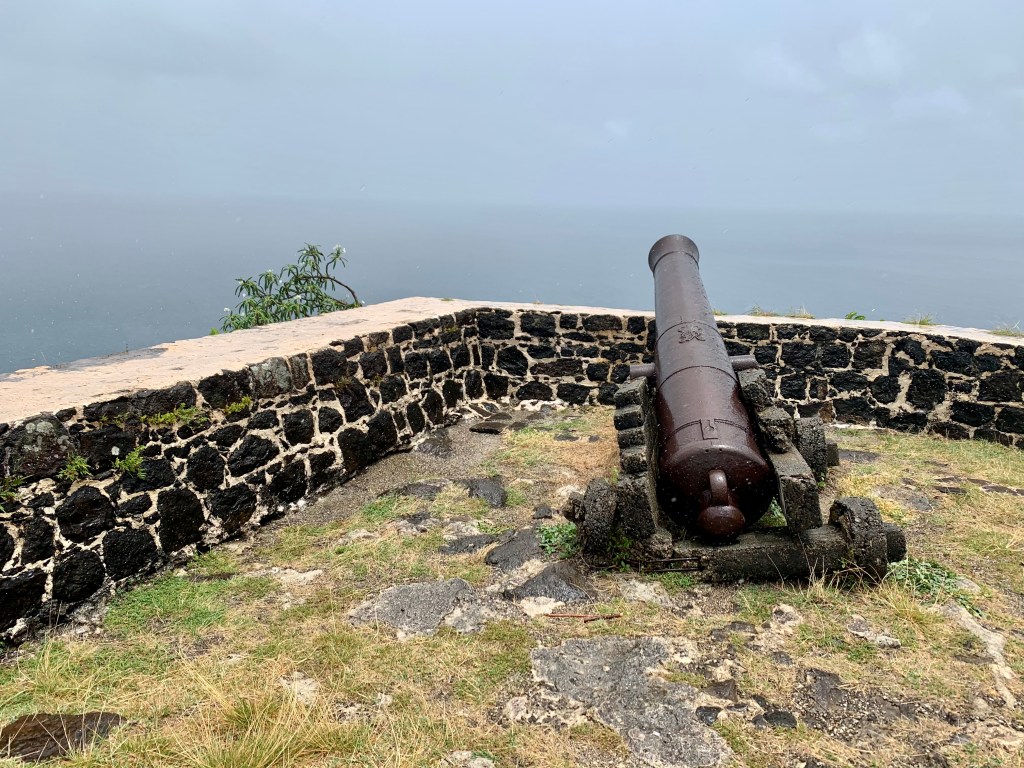
We were fortunate that our splendid hotel, the Royalton, was situated in the very northwestern tip of the island and right around the headland to the south was Pigeon Island National Park, one of the two major areas of interest to us on St Lucia. Forgoing the mesmeric whisper of sedated waves unfolding themselves upon the shore like turquoise curtains, we headed to Pigeon Island for some exploring. Our fortune continued as we had the entire 44 acre historic site to ourselves. Whilst Arawak and Carib artifacts found on the site date back to around 1000 AD it was French pirate, François le Clerc, who first used Pigeon Island as his base. Between 1779 and 1782, Admiral George Rodney of the British Royal Navy took over Pigeon island, and built Fort Rodney. To establish clear viewpoints, Rodney ordered all trees on Pigeon Island to be cut down and from the higher peak, Signal Hill, Rodney was able to observe the French naval base of Fort Royal on Martinique.
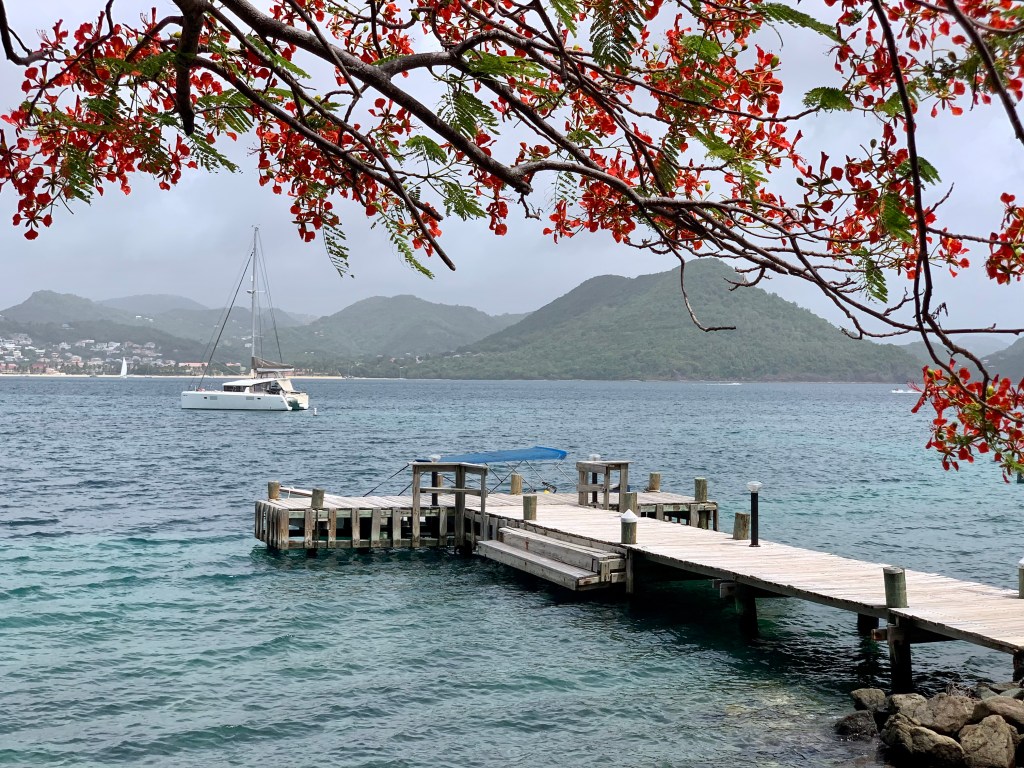
Being the rainy season, it rained occasionally. Being the Tropics and moderated by northeast trade winds, the clouds would rapidly clear and the sun would once again bring color and light to the island. “With heigh-ho, the wind and the rain, must make content with his fortunes fit, for the rain it raineth every day.” With those magical lines from King Lear in mind, we booked a catamaran day trip to see the Pitons, adjacent to the town of Soufrière, St Lucia’s original capital. So iconic are Petit and Gros Piton, two towering volcanic plugs, that they feature on the St Lucian flag and are St Lucias most recognizable site.

The hillside above the harbor was festooned with sun bleached and salt scratched shacks, crowned with wisps of tropical cloud, their multi-colored pastel roofs spilling down the rolling green hillsides like handfuls of wind-blown confetti.
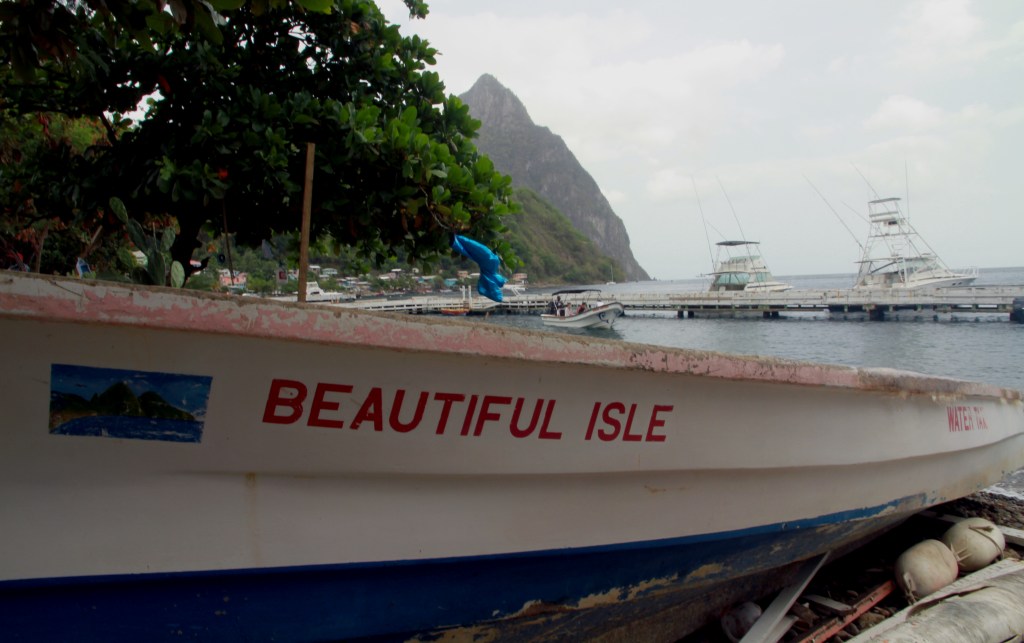
A multitude of fishing skiffs choked the early morning harbor, their well-worn bows smooth and weather beaten after a lifetime of ploughing the Caribbean Sea. Red, yellow, orange, blue and pale green they resembled a random collection of faded old stamps. Our boat nosed out of the harbor and headed slowly south down the western side of the island. The captain gave us a very informative commentary on the history of the island, the original Arawak tribe inhabitants, the slave-based sugar industry and the remarkable change of hands between the British and the French (they each possessed the island seven times!).
The early morning blue sky and sunshine had retreated by the time we passed Castries, St Lucia’s capital. The leaking sky, now filthy like coal spilling from a torn sack, created a crepuscular gloom above and churning waters below our bow. With impunity the malevolent clouds scudded along resembling the old black pirate flags that terrorized these waters in days of yore.
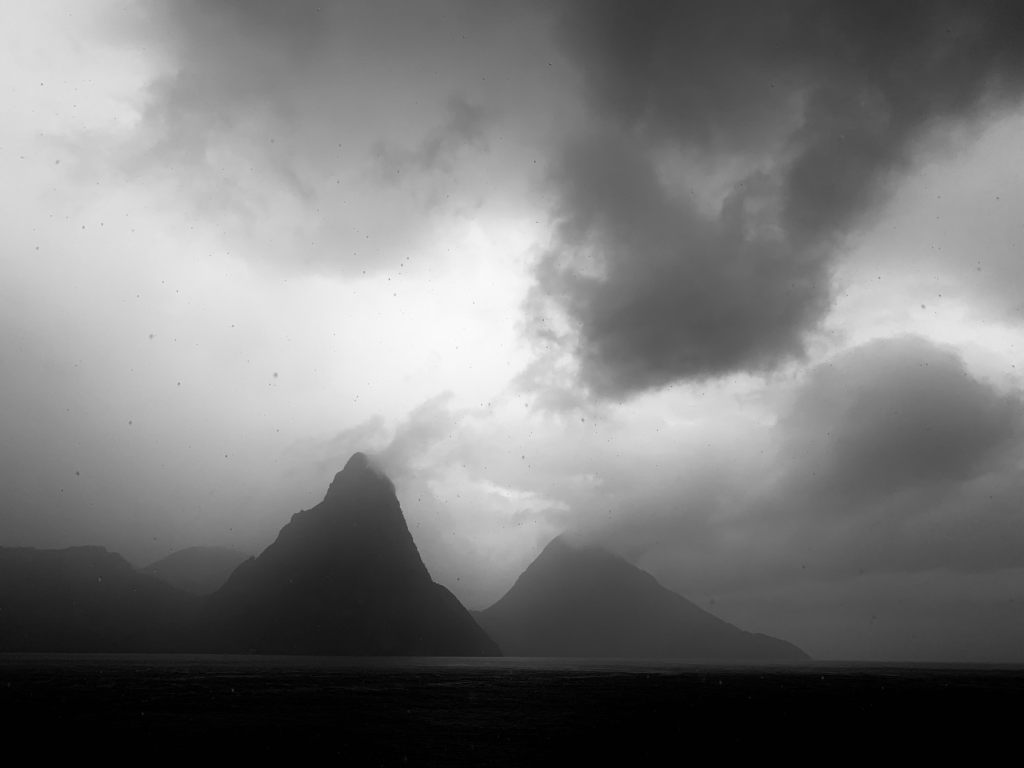
The Pitons loomed out of the tenebrous shore and once docked we enjoyed the cleansing and invigorating mud baths (in contrasting pounding, cool rain!) near to the sulfur springs in the caldera of the dormant Qualibou volcano.
A complex cornucopia of culinary charm, St Lucian cuisine is a literal and metaphorical melting pot with ingredients and influences adopted and adapted from places far and wide and deliciously melded into the spicy and flavorful smorgasbord on offer today.
Considered shabby chic in modern parlance, the Pink Plantation House nestling in the hills above the capital Castries has earned its considerable charm the hard way via over one hundred years of sun and salt and hurricanes and bacchanalia. A French colonial wooden house sitting on two acres of lush garden with an art gallery, the Pink Plantation House was utterly delightful and it’s French Creole cuisine (pork tenderloin, jumbo shrimp, marlin, Johnny cakes, and lashings of rum punch!) was extraordinarily good as were the views along the coast and out to the neighboring island of Martinique.
The Coal Pot, opened in 1968, is located on the waterfront of pretty Vigie Marina, and a cannon found in the harbor now guards the outside patio. Our evening was delightful as we feasted on Creole crab cakes, roast lamb with West Indian coconut curry and sea bass and mango salad. Our table was right on the water’s edge and a resident barracuda kept us company throughout the evening! The tiny restaurant was very intimate, and all the tables were set amongst the owner’s colorful handmade ceramics and the old stone pillars allowed the trade winds to keep the dining room breezy and cool.
The Naked Fisherman Beach Bar & Grill is right on the beach below Cap Maison and so we were serenaded by the soft symphony of the Caribbean just feet away. It was a surreal experience to be amongst such serenity and beauty and then dine on exquisite seafood chowder, ahi tuna poke, sticky jerk chicken satay, saltfish and dorado, our palates cleansed with chilled sauvignon blanc and, of course, the ubiquitous Piton beer!
St Lucia is a small island but, goodness, gracious me, it is a hugely attractive destination.
 One Step Beyond
Leave a comment