We left the manic maelstrom that is Guatemala City, the nation’s capital and, ‘Far From The Madding Crowd’, dropped down into Antigua, just 41 kilometres to the south. Antigua was Guatemala’s third capital city until ravaged by a series of ruinous earthquakes and is a delightful town in which to relax, explore and allow the world to saunter by. This exquisite treasure trove of disheveled antiquities sits at the base of three volcanoes; Volcan de Agua, Acatenango, and the Volcan de Fuego.
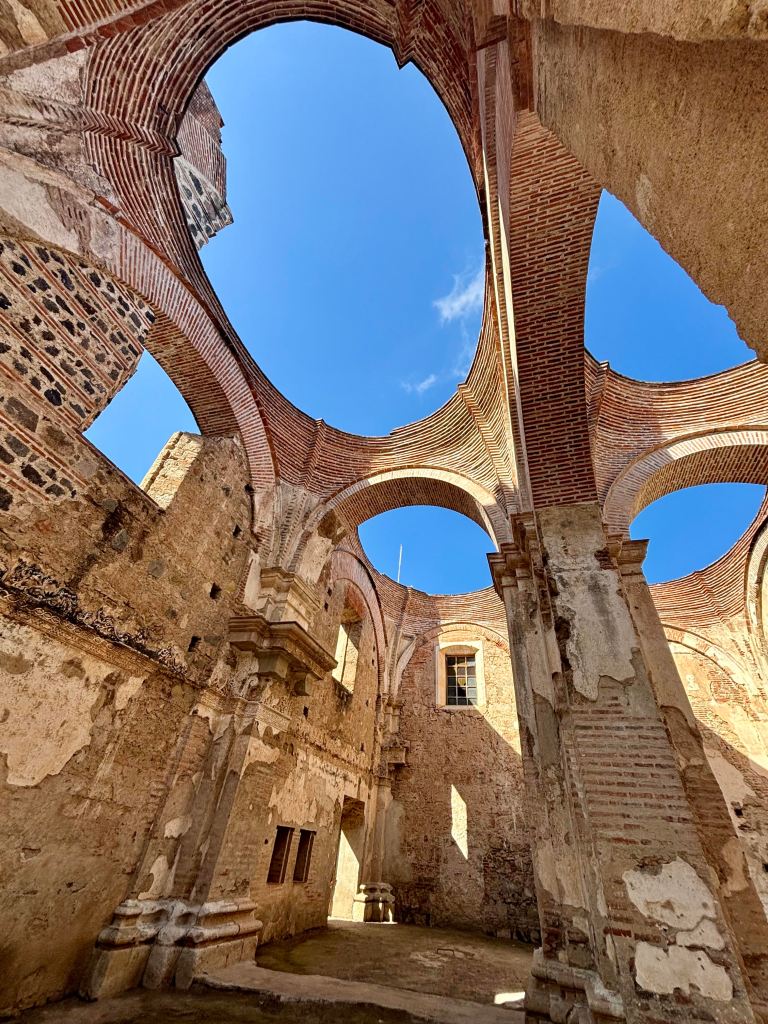
A simply stunning town whose decayed charm has been earned the hard way, a town that has been seriously shaked, rattled and rolled by destructive earthquakes that reduced the original quota of 36 churches, cathedrals, convents and monasteries to just 13 intact buildings now. The result is a town of astonishing visual delights as you tour the old Spanish colonial architectural facades and try to imagine the buildings before the walls (and roofs and steps and cupolas and altars) came a tumblin’ and a crashin’ down.
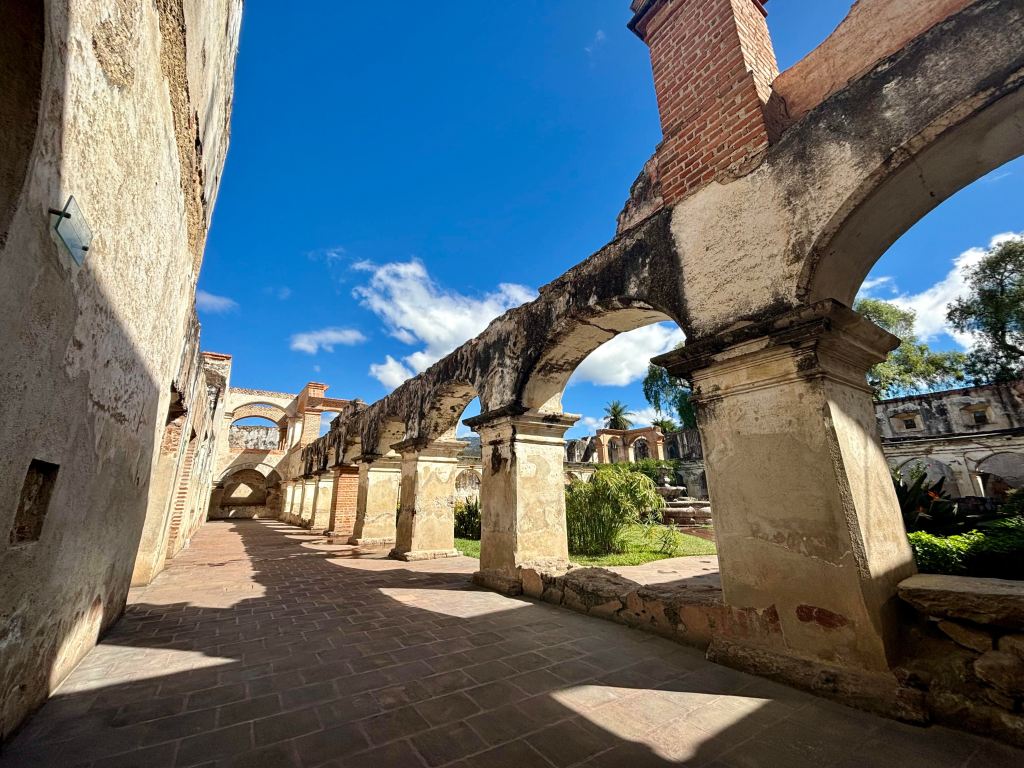
Out on the grid of cobbled stone streets wafts of coffee, chocolate, parillada and cigar smoke compete for your attention along with the parade of tuk tuks and the garishly colored ubiquitous public ‘chicken buses’. Shaded courtyards and the tinkle, tinkle, tinkle of cooling and mesmeric fountains accompanied our wanderings. We pursued the storied ruins of the town’s beautiful catholic churches and cathedrals, centuries old facades that momentarily obscure the violent and devastating demise beyond. Antigua’s partially ruined churches are akin to a garden of rose bushes in glorious full bloom that have been ravaged by a succession of gale force winds that scatter the intricate and beautiful petals hither and thither.
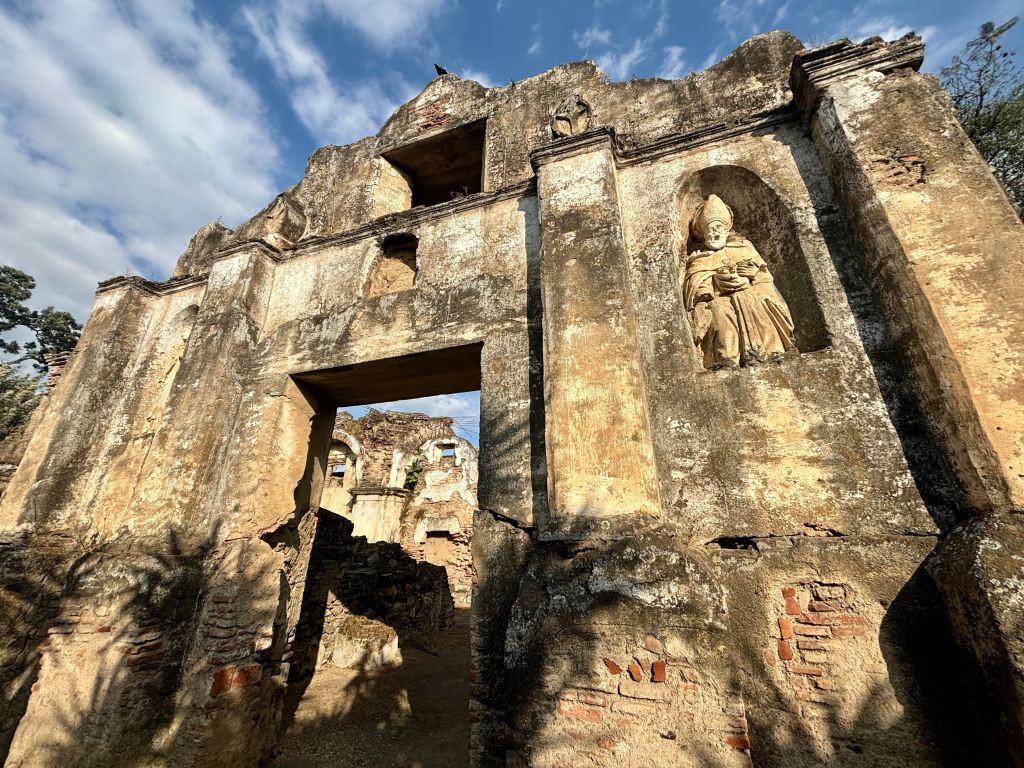
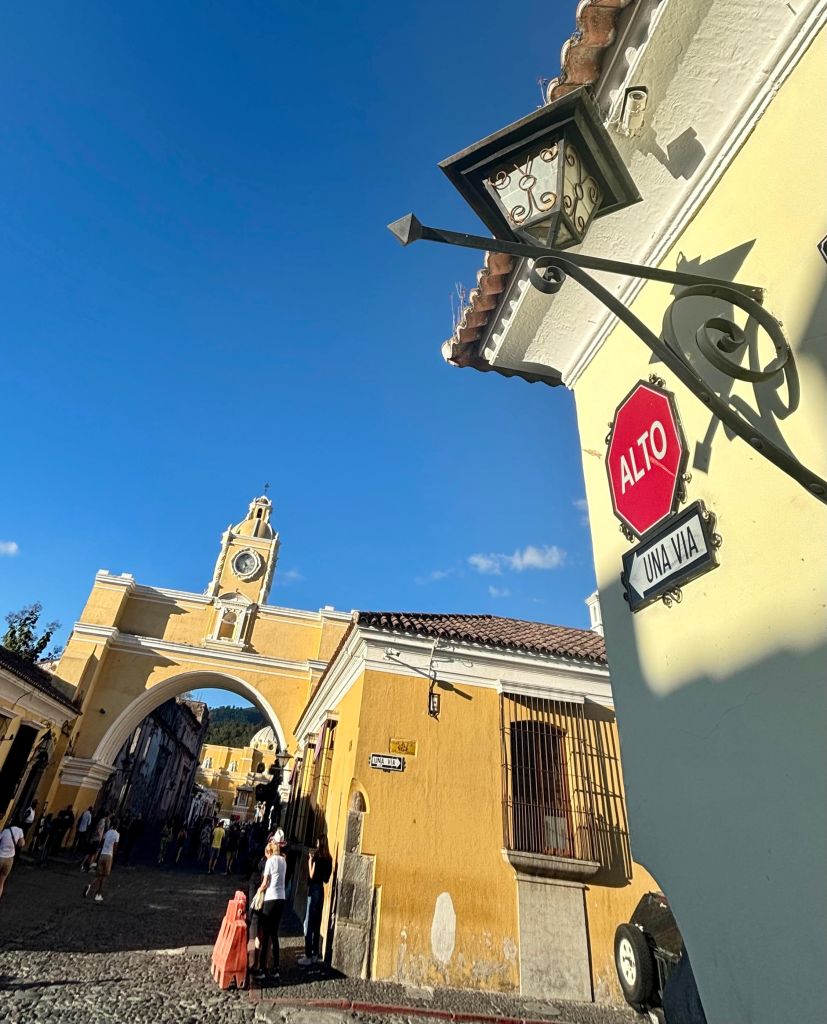
Wandering the faded grandeur of Antigua’s old churches invokes wonder and appreciation and a sweet melancholy for what we have lost to the forces of nature as we try to imagine these places in their prime several centuries before. The most photographed sites are undoubtedly the façade of the Catedral de San Jose that faces and dominates the shaded Parque Central and the utterly delightful Arco de Santa Catalina. Construction of the Catedral de San Jose began in 1545 and its complete construction was hampered by frequent earthquakes over the years, the third and final construction was consecrated in November 1680. In 1718, after the 1717 Guatemala earthquake the vaults, arches, dome and façade were repaired.
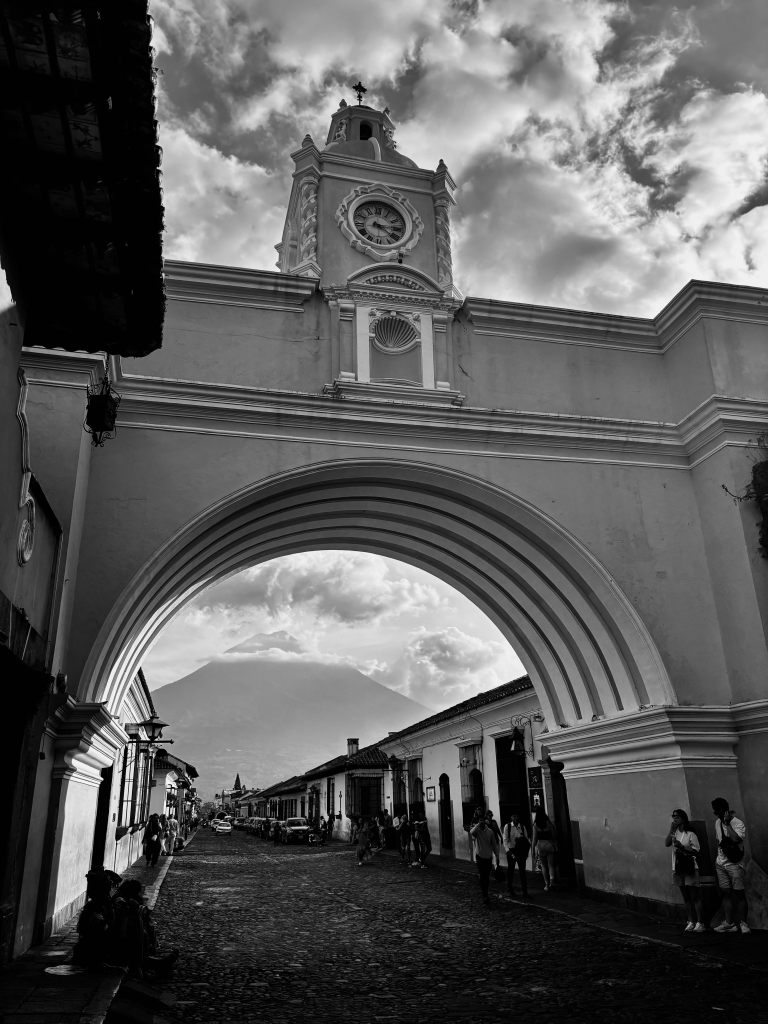
The delightful pale yellow Santa Catalina Arch is the most distinguishable landmark in Antigua through which it is possible to get views of the towering Vulcan de Agua looking south and the Iglesia de la Merced looking north. Built in the 17th century, it originally connected the Santa Catalina convent to a school, allowing the cloistered nuns to pass from one building to the other without going out on the street. A clock on top was added in the 1830s. We spent three care free days in Antigua, utterly beguiled and hoping to one day return – possibly to hike the Acatenango, stay overnight and rally for the sunrise view above the clouds of the smoldering Volcan de Fuego which spews lava regularly!
 One Step Beyond
Leave a comment