Dungeness Spit was formed during the Vashon Glacial era about 10,000 years ago as melting glaciers deposited thick sand and gravel along the coastline of what is now Sequim on the Washington Peninsula. The winds off the coast here ferry in powerful waves that buffet the soft sands at an angle and create unstable bluffs. The sediment and cobbles are then driven diagonally up the beach before being dragged back with the ebb and flow of the tides, creating the Spit that continues to grow at around 13 feet per year and is considered the fourth longest Spit in the world.
Amongst the first inhabitants were the S’Klallam Indians (“the strong people”). They set up as many as 30 villages at river mouths or harbors along the Strait of Juan de Fuca between the Hoko River and Discovery Bay. They sustained themselves on a rich diet of salmon, berries, elk, bear, marine mammals and shellfish and built shelters from forest resources. It is thought that they would have navigated the Salish Sea via the reefs, rocks and small islands in these parts.
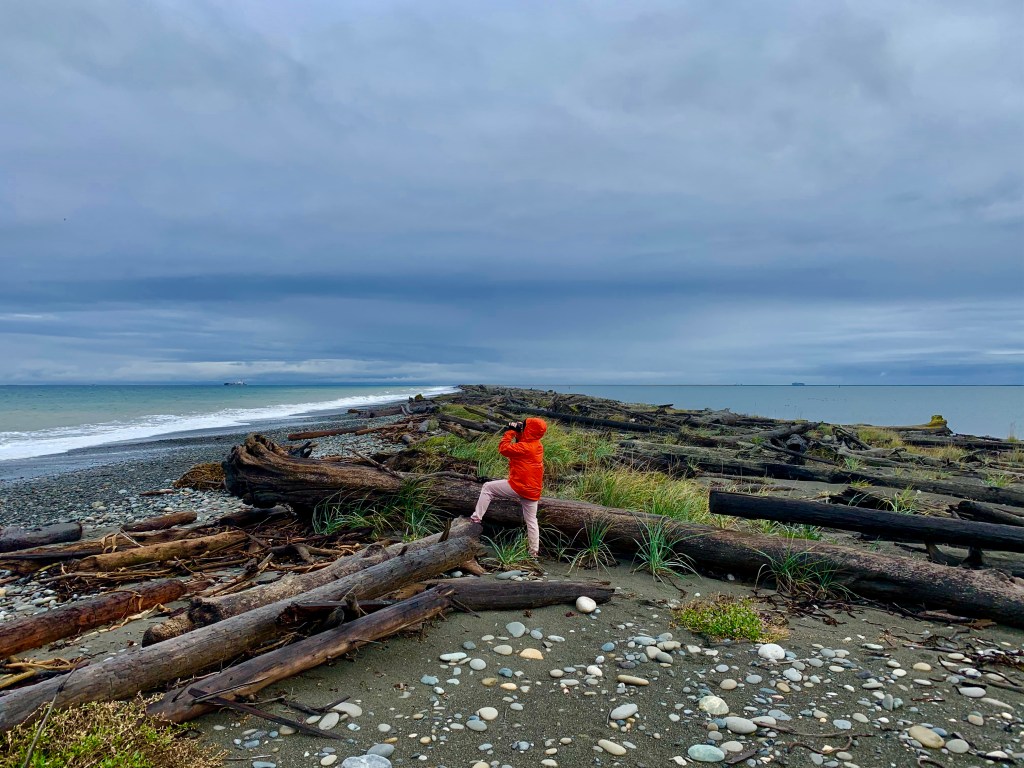
British Captain George Vancouver arrived in 1792 and named the area New Dungeness which reminded him of Dungeness in Kent on the English Channel. The name Dungeness in England is probably derived from a combination of Old Norse (Scandinavian) meaning ‘headland’ and French meaning ‘dangerous nose’! After several vessels ran aground, European mariners nicknamed it ‘Shipwreck Spit’.
The ubiquitous driftwood and beach plants that you see along the spine of the Spit ensure that the waves do not breach and fall into the calm waters of the Bay, possibly creating an island. Tidal flows sweep silt from the Dungeness River out into the bay and have, over time, created tide-flats.
Toward the tip of the Spit is the New Dungeness Lighthouse. Built in 1857, a steam-operated fog whistle was added in 1874 and a tower and radio equipment were added to monitor enemy activity in the Strait of Juan de Fuca in World War II. Automation followed in 1976 and the new 100-watt tungsten halogen bulb can be seen for 22 nautical miles. It flashes every five seconds and keeps sentinel 24 hours a day. In 1915 President Woodrow Wilson established a 636 acre refuge partly as a breeding ground for native birds. Its sandflats and mudflats provide extensive feeding areas for shorebirds and subtidal eelgrass beds provide a nursery for young salmon and steelhead and support significant populations of brant, diving ducks, seabirds, loons, grebes, and other diving birds.
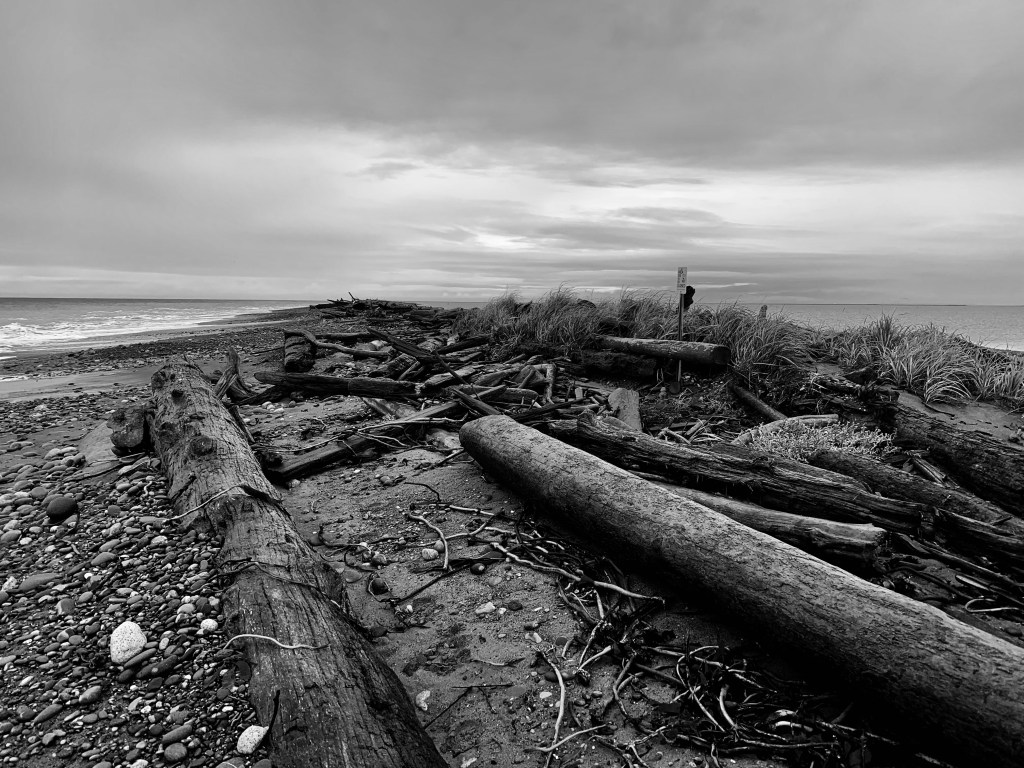
In November, Janelle and I paid a visit for a long weekend and, hot coffee in hand, headed out for the obligatory review of the Spit.
As we descended the gravel path, the sweet symphony of the roiling ocean was punctuated by the baritone boom of the waves slamming into the shore. It was early afternoon but the filthy sky had snuffed out any semblance of sunlight and had already ushered in a crepuscular gloom. The Spit snaked away to our right, cleaving a path between the riotous cacophony of the crenellated ocean and the sedate waters of Dungeness Bay. The Bay, by contrast, resembled a sheet of unruffled aluminium.
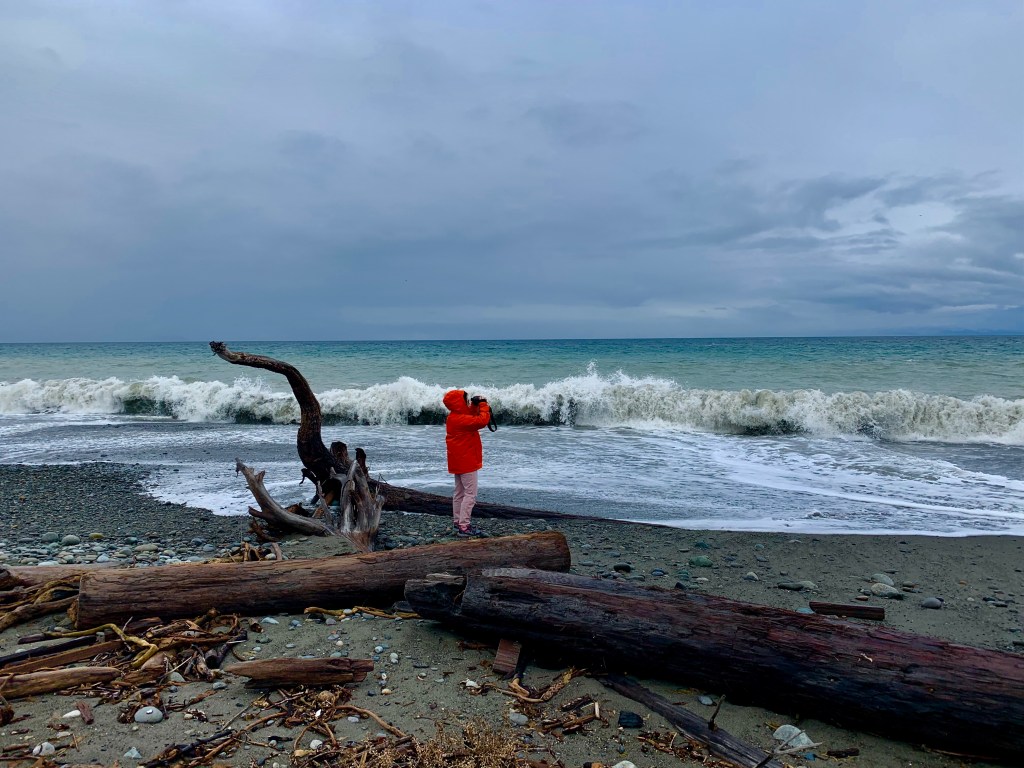
Shards of ice cold rain fell out of the sunken, lachrymose sky and danced in the black pools of our coffee. We braced ourselves and headed out along the narrow causeway, drinking in the cold air and the smell of the sea.
As a National Wildlife Refuge, dogs are not allowed on Dungeness Spit and on this most invigorating of days, we had the seven mile long expanse virtually to ourselves.
The angry, steel-blue waters were churning with violence and a veritable cavalry of substantial driftwood was gathering, biding its time before charging towards the sodden sand and gravel of the Spit, to unload its cargo with a stentorian crash. It was crude and brutal poetry and totally mesmerizing – we loved it, rain and all!
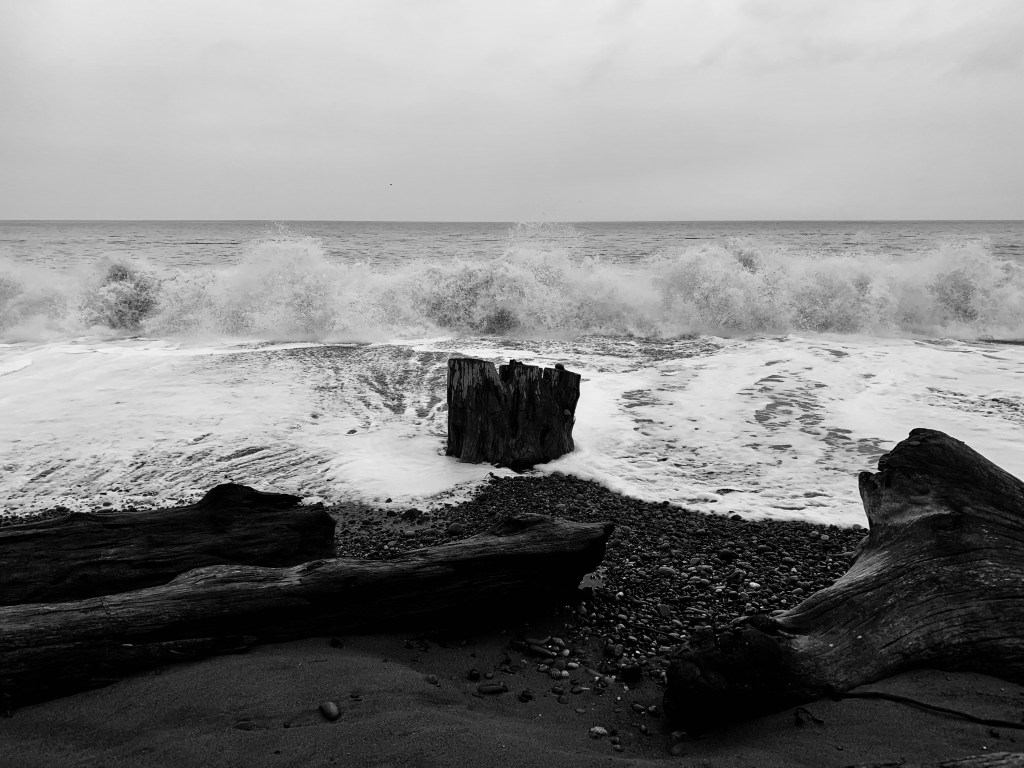
We zipped up our fleeces and pulled the hoods up on our raincoats as we carefully negotiated the sodden sands, pebbles and random driftwood, all the while serenaded by the heaving ocean to our left. Substantial knolls of glistening seaweed, quite possibly dumped by Jules Verne himself (!), punctuated the obstacle course as we moved further away from the sanctuary of the car park and out onto the narrowing and wind-whipped Spit. As the curtains of rain billowed in spitefully out of the encroaching ocean, our goal of reaching the lighthouse was still an unrealistic six miles away. The lighthouse, minutes before a proud exclamation point in the distance, was now rapidly losing form as the sparse light imploded and our footing became sloshy. We bailed and turned tail back towards the car park. The promise of an expensive cappuccino and a chocolate croissant in suitably plush surroundings of a Sequim café had won the day. From there we would retire to the well-appointed and super comfortable Greenhouse Inn by The Bay, where we opened a bottle of Merlot, switched on the fireplace and continued our vigil of the Spit from our ocean-facing balcony as rivulets of rain raced themselves down the window pane. A second visit in late Spring is on the cards!
 One Step Beyond
Leave a comment